Heads up: Gumnutly is reader-supported. Some links on this page are, or may become, affiliate links. If you buy through them we may earn a commission, at no extra cost to you. How we make money
Some flowers just say “Australia” before anyone reads the card. A sprig of golden wattle. A big red waratah. A banksia cone that looks like it was designed by someone with a sense of humour. Put any of the three on a tea towel, a print or a mug and you’ve got a gift that feels local without a single kangaroo in sight.
This guide gives you a quick, honest note on what each flower stands for, then the kinds of gifts that show them off best, and how to tell a thoughtful design from a cheap one.
How we pick
- Kinds of gift, not invented products. We describe types of gifts and what to look for. We don’t name a product unless we’ve checked it exists, and we haven’t named any here yet.
- Facts from botanic gardens and governments. Flower facts come from the Australian National Botanic Gardens, the NSW Government and the Department of the Prime Minister and Cabinet. We link each one.
- Meanings kept brief. Flower symbolism is a big topic, and much of it is tradition rather than fact. For more on flower meanings, our friends at Dozen Out of Roses cover the subject in depth.
- Original designs only. We steer you towards original artwork. Avoid anything that copies well-known children’s book characters or uses “Aboriginal-style” motifs that aren’t made or licensed by Aboriginal artists.
- No prices. Check the seller.
The three flowers, briefly
Wattle
The golden wattle is the national flower. In the words of the Department of the Prime Minister and Cabinet, “Australia’s national floral emblem is the golden wattle (Acacia pycnantha Benth).” Those fluffy golden flowers are a sure sign that spring has arrived.
What it says as a gift: home, spring, and a bit of national pride. It’s a natural choice for an expat, a new citizen or anyone who’s just moved into their first place.
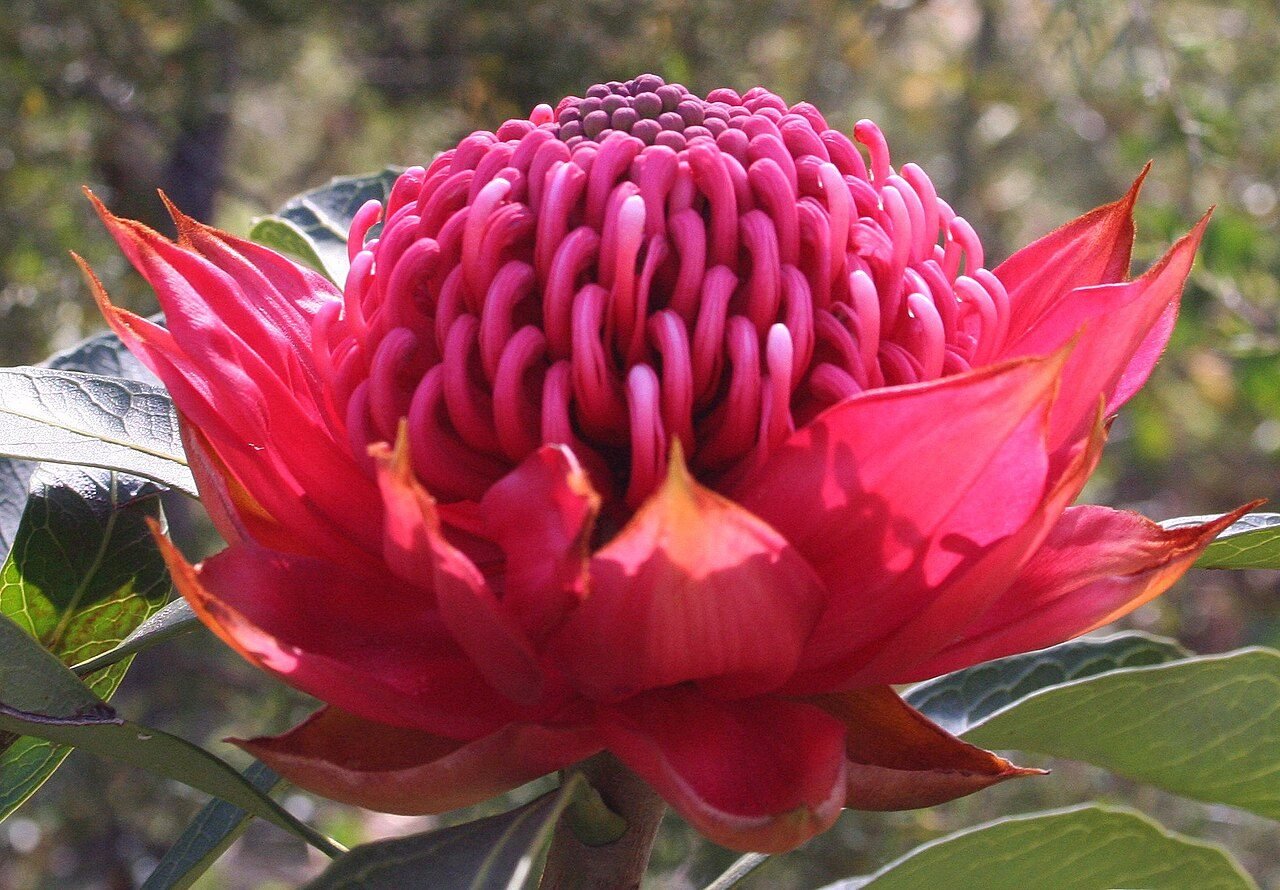
Waratah
The waratah is the big red one. It’s the floral emblem of New South Wales, and the Australian National Botanic Gardens notes that it was proclaimed the official floral emblem of NSW on 24 October 1962. Even the botanical name is a compliment: the same ANBG page explains that Telopea means “seen from afar”, and that speciosissima is the superlative of the Latin adjective speciosus, meaning beautiful or handsome.
What it says as a gift: bold, striking, a bit of drama. It’s a good choice for someone from Sydney or anywhere in NSW, or anyone who likes their colours loud.
Good to know: if you want cut waratahs, buy them from a florist or grower rather than picking them from the bush.
Banksia
Banksias are the shrubs and trees with the bottlebrush-shaped flower spikes that turn into woody, knobbly cones. The genus is named after Sir Joseph Banks. The Australian National Botanic Gardens notes he collected the first specimens of the genus on Captain Cook’s voyage in 1770.
Banksias are a particular point of pride over here in the West. According to the Australian National Botanic Gardens, south-western Australia contains the greatest diversity of banksias, with 60 species recorded.
What it says as a gift: quirky, earthy and very Australian. It suits the gardener, the bushwalker, or someone from WA.
Gift ideas that show them off
Botanical prints and cards
A framed botanical print is a classic for good reason. Many old botanical illustrations of Australian plants are now out of copyright, and some printmakers sell reproductions. Modern illustrators also draw these flowers in their own styles.
What to look for: the artist’s name, the paper and print method (giclée, screen print, letterpress), and, for reproductions of old illustrations, where the original came from. A print that names its artist and source is a good sign.
Tea towels, linen and homewares
Tea towels are the ultimate lightweight gift: easy to post, hard to break and actually useful. Wattle, waratah and banksia designs also turn up on napkins, cushion covers and aprons.
What to look for: the fabric (linen, cotton or a blend), where it was printed, and an original design credited to a named designer. If a listing says “Australian made”, check that the seller says so clearly, and that it covers the product itself, not just the design.
Ceramics and glassware
Mugs, small dishes, vases and tiles painted or printed with native flowers make good gifts for people who already have everything.
What to look for: handmade or small-batch pieces from a named maker, and clear care instructions (dishwasher and microwave safe or not).
Jewellery
Native flowers show up in enamel pins, earrings, pendants and brooches. A tiny wattle sprig brooch or a waratah enamel pin is easy to post and easy to wear.
What to look for: the metal used, whether the piece is made by the seller or bought in, and a returns policy in case it’s not quite right.
Banksia pods and turned pieces
Some makers also work with the woody cones of banksias, so it’s worth asking a maker what they offer. For more on timber gifts, see our guide to handmade wooden gifts from Australian timber.
What to look for: a named maker, the finish used, and whether the piece is suitable for posting overseas (see below).
Candles, soap and scent
Native flowers turn up on labels and packaging even when the scent is something else entirely. If the native ingredient matters to the person, read the ingredients rather than the picture. For more on brands that use native botanicals, see our guide to Australian skincare brands with native botanicals.
Something to grow
For the gardener, a native plant is a gift that keeps going for years. Ask a local nursery which wattles, waratahs or banksias suit the person’s climate and soil, as each grows best in particular conditions.
Wattleseed to eat
Wattle isn’t only pretty. Roasted wattleseed is a baking and coffee-style flavour, and our guide to native-flavour food gifts explains what it tastes like and how to pick a brand.
Choosing a design that’s done right
- Original artwork, credited. Look for a named artist or designer. If a design looks suspiciously like a famous artwork or a children’s book character, give it a miss.
- No borrowed culture. Avoid products that use “dot-style” or other Aboriginal art styles unless they’re made or licensed by Aboriginal artists. Our guide to buying First Nations art and gifts ethically explains how to check.
- Accurate flowers. A good botanical design gets the flower right. If the “waratah” looks more like a rose, the designer probably wasn’t working from the real thing.
- “Australian made” backed up. Only take an “Australian made” claim at face value when the seller states it clearly. Printed in Australia, designed in Australia and made in Australia are three different things.
- Practical details. Size, care instructions, materials and returns. The boring stuff is what separates a gift that gets used from one that gets regifted.
Sending botanical gifts overseas
Printed, woven or ceramic gifts generally travel well. Anything made from real plant material, such as dried flowers, banksia pods or seeds, is a different story. Many countries control plant products at the border. New Zealand Customs, for example, lists “plant and animal products, including food and accessories” among the things that need permission, as explained on its receiving items from overseas page.
So for overseas family, the safe bet is a print, a tea towel, a card or jewellery. Check our Christmas gifts for Aussie expats and the Australia Post Christmas cut-off dates 2026 before you post.
A few pairings
- For the expat: a wattle tea towel and a jar of roasted wattleseed.
- For the Sydneysider: a waratah print and a matching card.
- For the West Aussie: a turned banksia pod piece and a banksia-print tea towel.
- For the gardener: a native plant from a local nursery and a field guide to Australian wildflowers.
- For a hamper: add a botanical tea towel to wrap the whole thing. See Australian Christmas hampers compared.
More from Gumnutly
- Australian souvenirs that aren’t tacky
- Best Australian-made gifts to send overseas
- All our gift guides
Written by our editors. Flower facts are from the linked official and botanic garden sources. Last checked: 1 November 2026.