
Heads up: Gumnutly is reader-supported. Some links on this page are, or may become, affiliate links. If you buy through them we may earn a commission, at no extra cost to you. How we make money
If you want a food gift that tastes like nowhere else, skip the shortbread tin. Lemon myrtle tea, a jar of wattleseed, a pot of finger lime pearls or a Kakadu plum jam says “Australia” in a way a koala-shaped chocolate never will.
These flavours have a long history, though, and they come from someone’s Country. So this guide does two jobs. It explains what each one tastes like, so you can pick something the person will actually enjoy. And it shows you how to choose brands where the benefit flows back to Aboriginal and Torres Strait Islander people.
How we pick
- Flavour first, described by people who work with it. Tasting notes come from growers, suppliers and food writers, and we link each one. We haven’t run our own taste tests.
- No health or nutrition claims. You’ll see these ingredients marketed with all sorts of claims. We don’t repeat them. This is a guide to flavour and ethics.
- Who benefits matters. We look at ownership and sourcing, and we show you how to check them, rather than taking a “bush” label at face value.
- No brands named yet. We haven’t verified the ownership and sourcing claims of individual brands, so this guide gives you the checks to apply. We’ll add named picks only once they’re verified.
- No prices. Check the seller.
The four flavours
All four are on the list of 13 priority native food species identified by the Rural Industries Research and Development Corporation, alongside the likes of mountain pepper, bush tomato, quandong, riberry and Davidson plum, as reported by Food & Drink Business.
Lemon myrtle
Tastes like: lemon, without the sourness. One seller of dried leaves says it has a “vibrant, refreshing and citrusy flavour with delicate hints of menthol.” Think of it as a lemon flavour that comes from a leaf rather than a fruit.
Good gifts: loose-leaf or bagged tea, a jar of dried leaf for cooking, lemon myrtle shortbread or salt blends.
Good to know: it’s the most widely grown of the four. Food & Drink Business reports that lemon myrtle leaf has been the standout priority species, with annual production of 575 to 1,100 tonnes. That means it’s easy to find, but also easy to find from big non-Indigenous growers, so the ownership checks below matter.
Wattleseed
Tastes like: roasted, it has “a flavour of coffee, chocolate and hazelnut”, according to Food.com’s ingredient guide. It’s the one to give the coffee lover or the baker.
Good gifts: a jar of roasted, ground wattleseed (for baking, ice cream or stirring into hot milk), wattleseed biscuits or a dukkah-style blend.
Good to know: buy it from a seller that tells you which wattle it comes from, where it was grown or harvested, and how it was roasted.
Finger lime
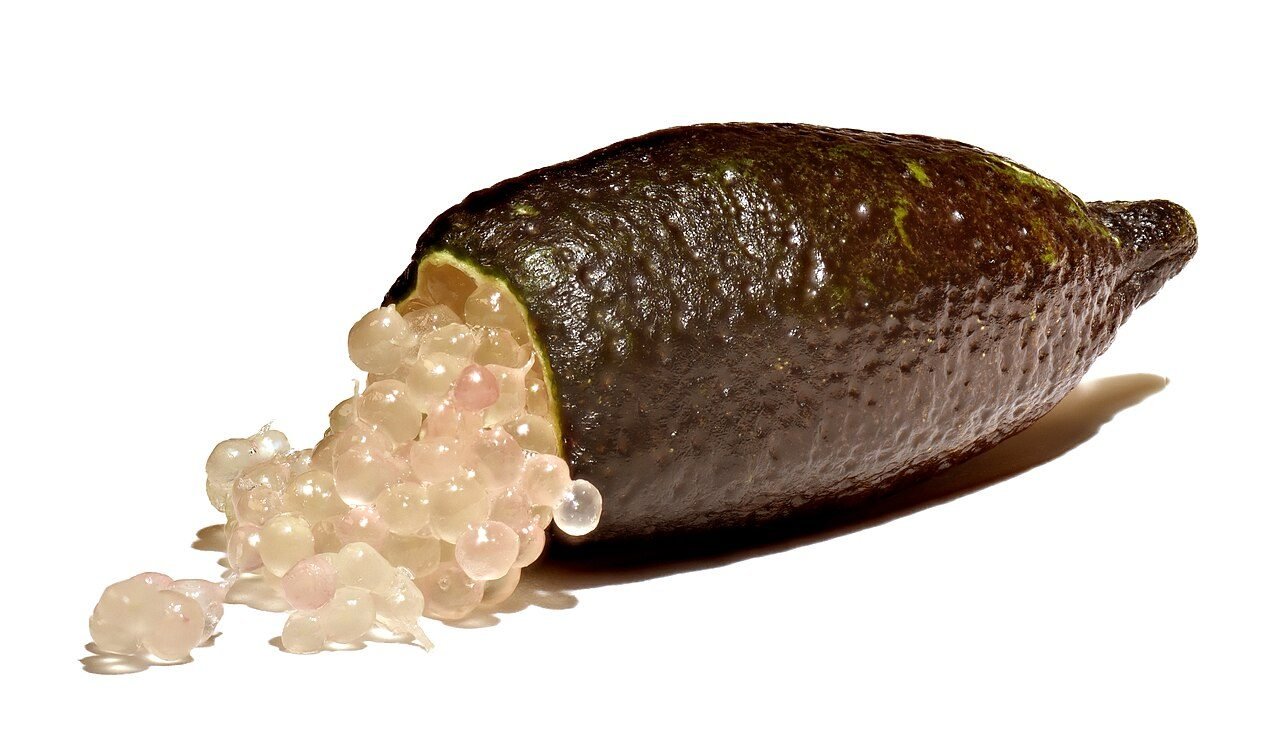
Tastes like: a lime that’s been broken into tiny pearls. Inside the skin are tiny balls of flesh that burst with a sour and tart tang. The flesh can be pink/red or yellow/green.
Where it’s from: the finger lime (Citrus australasica) grows in the rainforests of the border ranges of south-east Queensland and northern New South Wales.
Good gifts: frozen or preserved finger lime pearls, finger lime marmalade, or a finger lime gin-and-tonic garnish kit for the cocktail-maker. Fresh fruit is a gift for someone close by, not one to post.
Kakadu plum
Tastes like: check the seller’s own description. As a gift, we think it works best in jams, chutneys and sauces, where it’s balanced with sugar or spice.
Good gifts: Kakadu plum jam, chutney or a fruit-based condiment.
Good to know: Kakadu plum is mostly gathered from the wild rather than farmed. The Victorian Traditional Owner strategy reported by Food & Drink Business says that while most native species now come from cultivated harvests, wild harvest remains the dominant source for mountain pepper, bush tomato and Kakadu plum. That makes who’s harvesting it, and on whose Country, a fair question to ask.
Who benefits? The bit most gift guides skip
Native foods are having a moment, and there’s money in it. The University of Sydney estimated the bush food industry was worth $81.5 million in 2019–20, according to SBS News. But in the same story, Koori chef Chris Jordan says: “Less than 3 per cent of Australia’s bush food industry is Aboriginal and Torres Strait Islander owned, and I think that really needs to shift.”
That’s not only a business issue. At the first National Indigenous Bushfood Symposium in 2019, participants issued a statement that said, in part: “Our Indigenous Knowledge, plants and animals have ended up in supermarkets, databases and research projects without our consent or participation.”
Since then, Indigenous-led organisations have stepped up. One outcome of the symposium was the First Nations Bushfood and Botanical Alliance Australia, which Food & Drink Business describes as “the sector’s first national, Indigenous-controlled bushfoods industry body.” In Victoria, Traditional Owners have released a strategy to restore their leadership of the state’s native foods and botanicals industry.
There’s also the problem of fakes. A SmartCompany piece on the export boom warns that counterfeit bushfoods are appearing on Asian e-commerce platforms, “often suspiciously vague about source and species.”
How to choose a brand that benefits Traditional Owners
Use these checks on any native-food gift, from a market stall to a big online store.
- Who owns the business? Look for a clear statement on the brand’s own website that it is Aboriginal- or Torres Strait Islander-owned, and by whom. “Inspired by” or “celebrating” isn’t the same thing.
- Is it in a verified directory? SBS Food points readers to Supply Nation, Trading Blak, Bushfood Shop and the First Nations Bushfood and Botanical Alliance Australia for finding Aboriginal food businesses.
- Where does the ingredient come from? Good sellers name the species, the region and whether it’s wild-harvested or farmed. For wild-harvested ingredients such as Kakadu plum, ask who harvests it and with whose permission.
- If it isn’t Indigenous-owned, how does it share the benefit? If a brand says it buys from Indigenous growers or harvesters, or works with a Traditional Owner group, it should be able to name them. If it can’t, be cautious.
- Be wary of vague labels. No species, no region and no maker is a red flag, especially from overseas marketplaces.
- Skip the health claims. A brand that leans heavily on “superfood” claims is selling you the claim, not the flavour.
Giving them overseas
Dried, sealed, commercially packaged products (tea, ground wattleseed, jars of jam) are generally easier to post than fresh fruit, but every country has its own rules on plant products. Read our guide to sending Aussie food overseas before you post, and check the Australia Post Christmas cut-off dates 2026.
If you want a native-flavour gift that never has to go through customs, a candle or hand wash scented with lemon myrtle or eucalyptus is an easy swap. Our Christmas gifts for Aussie expats guide has more ideas.
Gift box ideas
- For the tea drinker: lemon myrtle tea and a native-botanical tea towel.
- For the baker: roasted ground wattleseed and a handwritten recipe for wattleseed shortbread.
- For the cook: finger lime pearls (if they live nearby) or a Kakadu plum chutney.
- For the curious: a little sampler with one of each, and a card explaining whose Country each one comes from.
More from Gumnutly
- How to buy First Nations art and gifts ethically
- Australian souvenirs that aren’t tacky
- Australian-made gifts from Margaret River
- All our gift guides
Written by our editors. Tasting notes are the linked sources’ own. No health or nutrition claims are made or implied. Last checked: 31 October 2026.