
Heads up: Gumnutly is reader-supported. Some links on this page are, or may become, affiliate links. If you buy through them we may earn a commission, at no extra cost to you. How we make money
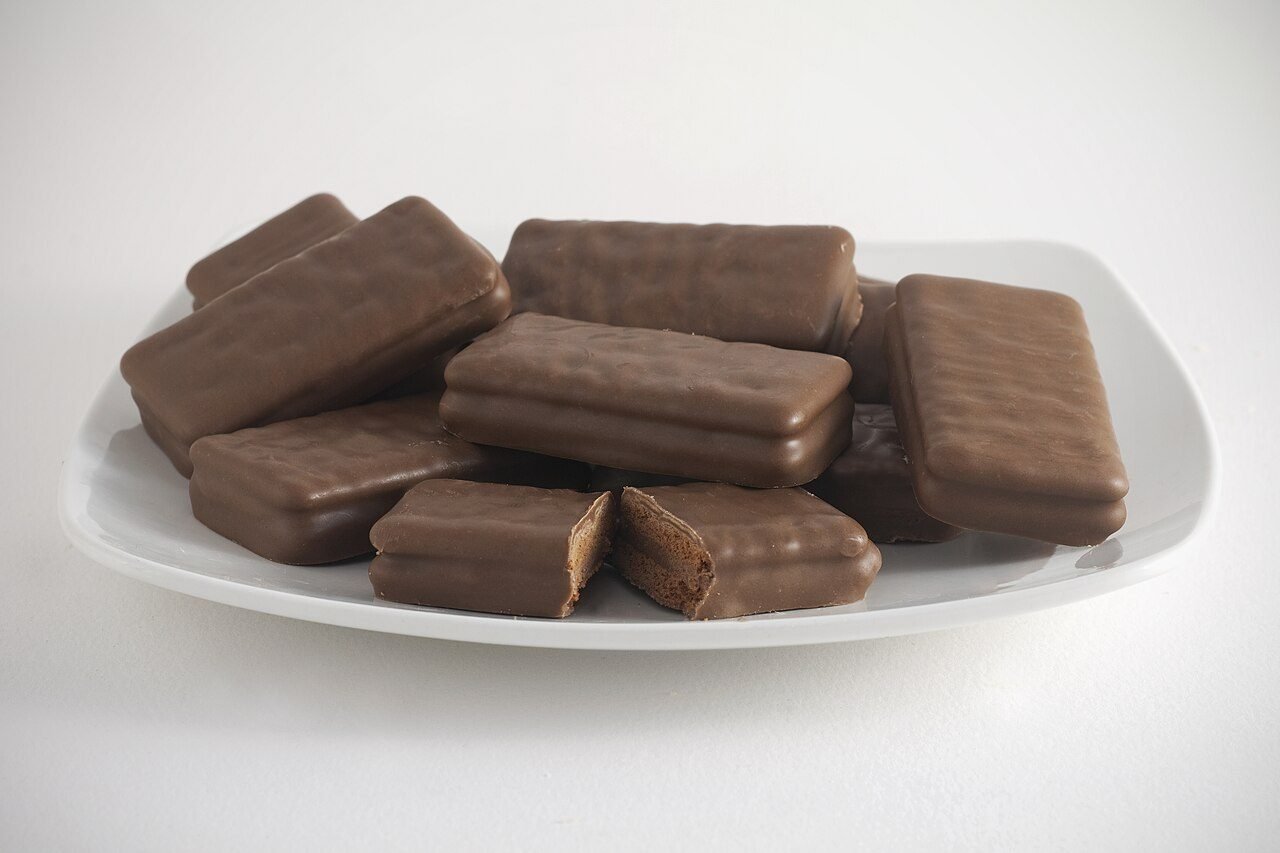
A care package of Tim Tams, Vegemite and a bag of macadamias is about the most Australian thing you can post. It’s also the kind of parcel that gets opened at the border. This guide sets out what the official sources say for the three places Aussies most often post food to (the United States, New Zealand and the United Kingdom), and what you need to check before you tape up the box.
One rule before anything else: check the destination country’s current rules on the day you post. Food import rules change, sometimes quickly, and the official government page always beats this one.
How we put this together
- Official sources only. Everything here comes from Australia Post, the US Food and Drug Administration (FDA), New Zealand Customs Service, New Zealand’s Ministry for Primary Industries (MPI) and GOV.UK. We link each one so you can read it yourself.
- No guesses about specific products. No government publishes a list saying “Tim Tams: yes”. We tell you which category your food is likely to fall into and where to check. We don’t promise it’ll get through.
- No health claims, no prices. Postage and duty change; use the official calculators.
- We’re not lawyers or customs brokers. If you’re sending a lot, or sending for business, talk to a customs broker.
Step one: what Australia Post will carry
Before you think about the other end, make sure the parcel can leave Australia. Australia Post’s prohibited and restricted items page lists common things that can’t go in the post, including flammable liquids such as nail polish, paint or perfume, aerosols, and self-heating items such as some instant meals. That matters for care packages: a bottle of perfume or a can of spray tucked in beside the snacks can get the whole box refused.
Australia Post also says items “must also be accepted by the customs department of the country you’re sending to”, and points you to its International Post Guide to search customs rules by country. If you’re unsure about an item, it suggests contacting that country’s embassy.
Timing: food parcels are the ones most likely to be slowed by inspection, so leave yourself a buffer. Our Australia Post Christmas cut-off dates 2026 page has the official dates for each country.
Sending food to the United States
The US has a system called prior notice, where the FDA is told about imported food before it arrives. The question for most care packages is whether it applies to a gift from one person to another.
The FDA’s policy on sending gifts to friends and family says that the FDA and US Customs and Border Protection (CBP) “typically consider not taking any regulatory action” when there’s no prior notice and the food is sent for non-commercial purposes by a non-commercial shipper. In plain terms:
- You buy the Tim Tams at the shops and post them yourself to a friend or family member. The FDA gives almost this exact example: you are the shipper, the mail service is the carrier, and the FDA and CBP “generally would consider not taking any regulatory action” if prior notice isn’t submitted.
- The shop posts them for you. This one is different. If the store ships the food, the store is the shipper. Because it isn’t an individual, the FDA says this isn’t covered by the gift policy, and it “generally would take regulatory action” if no prior notice is submitted, though for minor or inadvertent cases it says staff should usually start with education rather than enforcement.
So if you’re ordering from an Australian online store that ships to the US, ask the seller how it handles US prior notice.
What prior notice doesn’t cover: the FDA’s gift policy is about paperwork, not about whether a food is allowed in at all. Other US rules, including agricultural rules on things such as nuts, seeds, meat and fresh produce, may still apply. Check CBP and the USDA for the current position before posting macadamias or anything homemade.
Sending food to New Zealand
New Zealand takes biosecurity very seriously, and food is exactly what its border is looking for.
What NZ Customs says. On its receiving items from overseas page, New Zealand Customs lists “plant and animal products, including food and accessories” among the examples of items that need a permit or permission before they can be brought in. It also says:
- Importing prohibited goods is against the law, and the receiver may get a $400 fine. They can also be fined if what’s in the parcel doesn’t match the description on the declaration.
- The recipient doesn’t pay anything to Customs if the item is valued at NZ$1000 or less, unless it’s alcohol or tobacco. Duty and GST are charged on alcohol and tobacco regardless of value, so leave the bottle of Aussie red out of the box.
What MPI says. New Zealand’s Ministry for Primary Industries says on its overseas mail page that mail that may contain risk goods, like food, will be opened and examined and may be detained. MPI’s Check if you can bring or send an item to NZ tool lets you search for a specific food. Use it for each item in your box, including the macadamias.
Practical upshot: declare every food item accurately on the customs form. A clear, honest description (“chocolate biscuits, commercially packaged, 2 packets”) is your best protection against the fine for a mismatched declaration.
Sending food to the United Kingdom
The UK rules on GOV.UK’s Bringing food into Great Britain page are written for food brought in for your own use, and they cover England, Scotland and Wales. Northern Ireland has different rules. The page is the official starting point, but check how the rules apply to posted parcels, and read the linked detail pages for each food type.
GOV.UK lists foods you can bring into Great Britain from any country without restriction, including:
- biscuits
- chocolate and confectionery, but not those made with a lot of unprocessed dairy ingredients
- bread, and cakes without fresh cream
- packaged soup, stocks and flavourings
It also says there are restrictions on meat, dairy, fish and animal products, and on fruit, vegetables, nuts and seeds.
What that means for a typical box:
| Item | Category to check on GOV.UK | Our note |
|---|---|---|
| Tim Tams | Biscuits, or chocolate and confectionery | These categories are on the GOV.UK unrestricted list. Check the dairy note for chocolate. |
| Vegemite | Not named | Check the GOV.UK detail pages before posting. We can’t tell you which category it falls into. |
| Macadamias | Nuts | Nuts are in a restricted category. Read the fruit, vegetables, nuts and seeds page first. |
| Lollies | Chocolate and confectionery | On the unrestricted list, with the same dairy note. |
Tim Tams, Vegemite and macadamias: our packing notes
These are general packing tips, not customs advice.
- Keep everything sealed in its original, commercial packaging. It’s easier to describe on a customs form, and easier for an inspector to identify.
- Skip the homemade. Lamingtons, Anzac biscuits and Mum’s fruit cake are lovely, but they’re the hardest things to describe and the most likely to be questioned.
- Pad the Tim Tams. They break. A tea towel is padding and a second present.
- Think about the heat. Chocolate posted in an Australian summer can arrive as a single chocolate brick.
- Describe each item on the form. Name the food, how it’s packed and how many there are.
For more ideas on what to put in the box (and what posts well), see our Christmas gifts for Aussie expats and best Australian-made gifts to send overseas guides.
Your pre-posting checklist
- Check the destination’s official rules today. US: FDA, CBP and USDA. NZ: NZ Customs and MPI. UK: GOV.UK.
- Check Australia Post’s prohibited items list and International Post Guide.
- Leave out perfume, aerosols, alcohol and anything homemade, fresh or containing meat.
- Post it yourself if you’re sending to the US and want the FDA gift policy to apply, or ask the seller how it handles prior notice.
- Declare every item honestly on the customs form.
- Post early. See the 2026 cut-off dates.
If food is too risky
Some boxes just aren’t worth the border risk. Things that post well and don’t need a biosecurity check include a print by an Australian artist, a native-botanical tea towel or a symbolic wildlife adoption. Or send the food that’s easiest to describe, like a sealed packet of biscuits, and make the rest of the box non-edible.
More from Gumnutly
- Australia Post Christmas cut-off dates 2026
- Christmas gifts for Aussie expats missing home
- Native-flavour food gifts: lemon myrtle, wattleseed, finger lime and Kakadu plum
- All our gift guides
Written by our editors. This is general information, not legal or customs advice. Rules are the agencies’ own, linked above, and can change. Last checked: 31 October 2026.